
🎃 October half term is creeping up! See what’s on across the Lake District.
Want to avoid the whinges and actually cover some distance on a family walk? These are our top tips for hiking with kids under 5, including toddlers, and making walks a little more enjoyable for everyone.
A Lake District family walk can be a brilliant way to spend time together. Fresh air, beautiful scenery, a bit of exercise and, if you’re lucky, a long nap at the end of it. What’s not to like?
Well… the whining. The refusal to walk. The sudden inability to walk despite having sprinted up a hill five minutes earlier. The demands to be carried.bYep, we’ve been there.
If you’re an outdoorsy parent, it can be incredibly frustrating when your child doesn’t seem to share your enthusiasm for a lovely long walk. You can see the beautiful views, they’re seeing a massive puddle and wondering why you won’t let them lie in it.
So, after plenty of experience of hiking with young children, here are our top tips for keeping everyone reasonably sane on a family hike.
These are the things that have worked for us, but every child is different. You might find some work brilliantly and others don’t work at all. That’s fine. Hopefully you’ll find at least a couple of ideas to try on your next Lake District adventure.
Disclaimer: This post contains affiliate links. Should you click to purchase, it is at no additional cost to you, but we receive a small commission.
When planning your visit to the National Park, please arrive early or late in the day to avoid crowds if visiting over sunny weekends or school holidays. Please also take all litter home with you, don’t bring BBQs, and park your car in designated parking areas. Also, please use these walks as a guide; access and stiles may change.
PARKING INFORMATION: Please do not rely solely on the postcode for parking directions. In the National Park, a postcode can cover a large area. Postcodes are only provided as guidance. Please either use the Google Maps point or what3words, which are provided on every walk guide.
1. Ditch the buggy and carrier
I do sometimes miss those hiking-with-a-baby days. Strap a baby to your back, put them in a carrier and off you go. They sleep. You walk. Everyone’s happy.
Well, mostly.
Once our youngest was around 18 months, we stopped taking the carrier on hikes. Yes, this made things very slow. When I say slow, I mean painfully slow. A walk that should have taken an hour could take three because apparently every single stone, stick, puddle and blade of grass needed investigating.
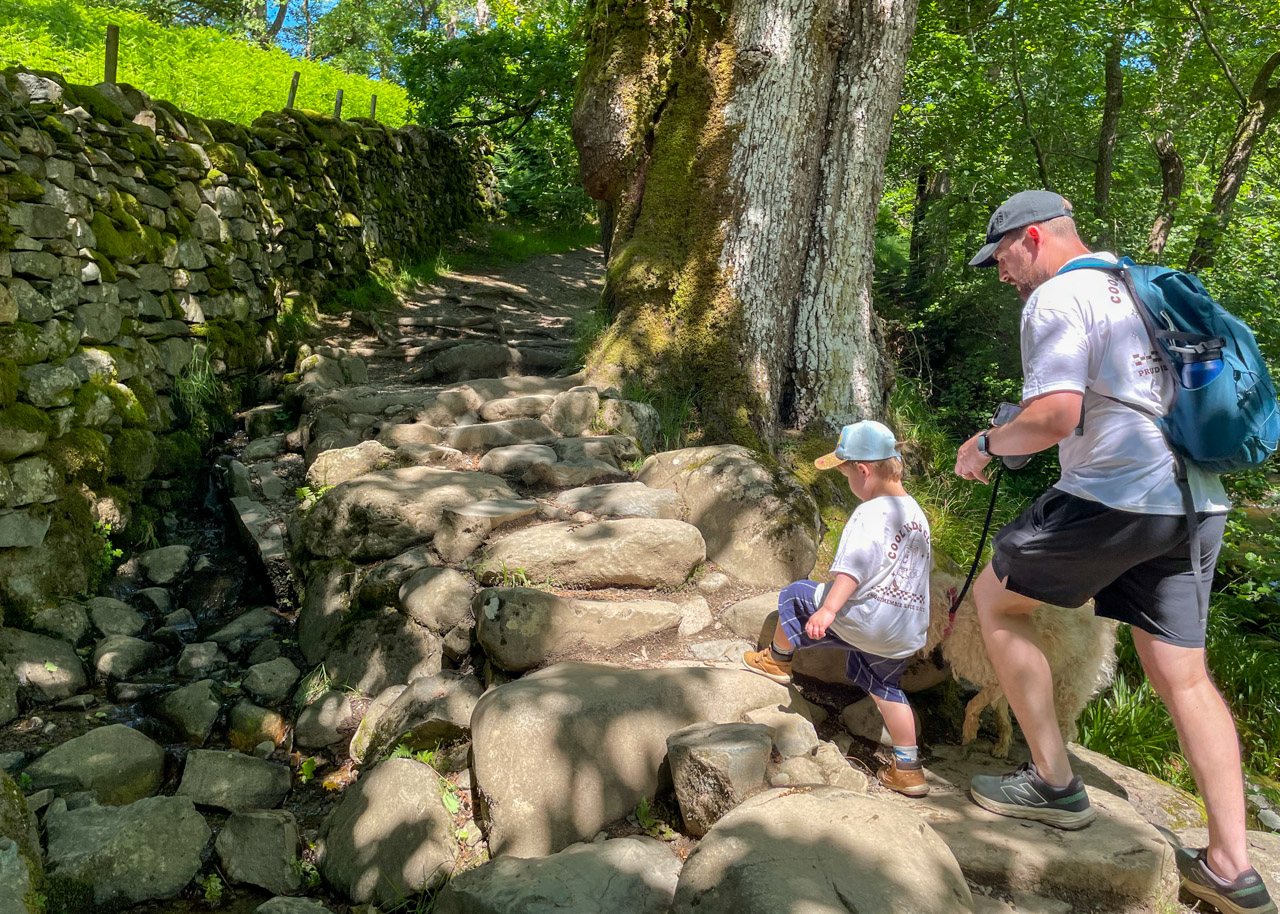
But with no carrier or buggy in sight, there was no option to take the easy way out. They had to walk. And gradually, they got used to it.
It required a bucket load of patience from us, but it was usually rewarded with a very long afternoon nap. Which, let’s be honest, was almost as good as a successful hike.
2. Pack more snacks than you think you will need
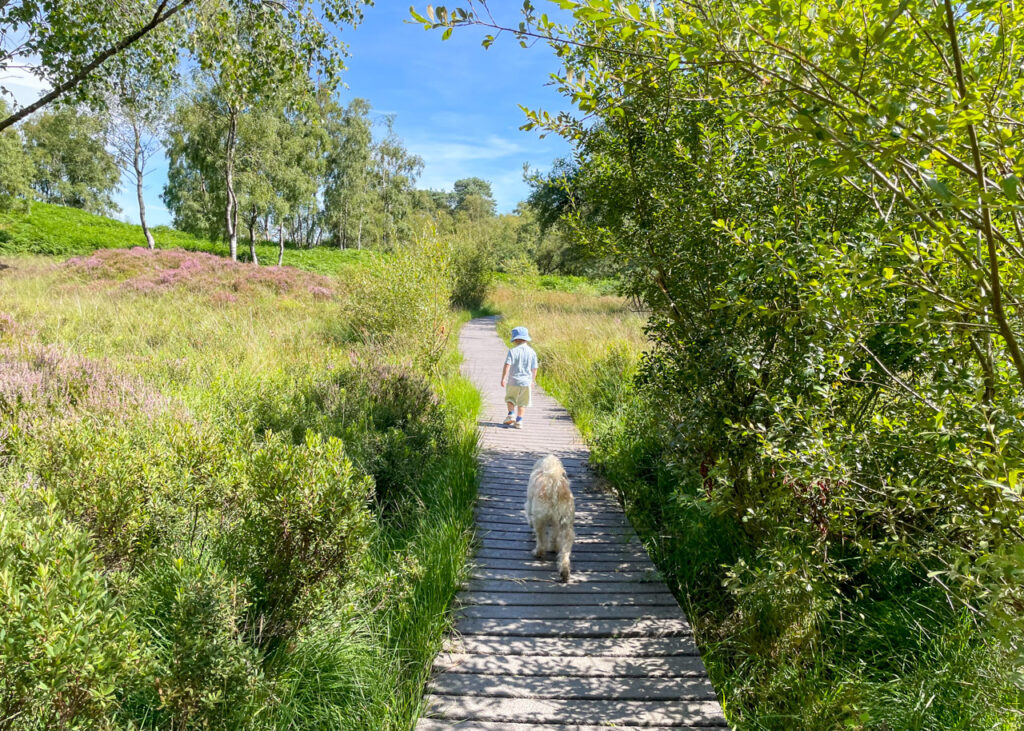
Children seem to have a remarkable ability to become very hungry approximately five minutes into a walk. Snacks can make all the difference, particularly when little legs are starting to tire. Pack more than you think you’ll need, starting with some healthier options but keeping a few favourite treats in reserve for when morale starts to dip. Haribo and marshmallows work a treat, and we’ve even been known to have one parent run ahead and hide a treat behind a rock. That certainly gets them moving!
Also make sure you take enough water. And in the colder months, a flask of hot chocolate always goes down a treat.
3. Get out early in the day
Toddlers are generally at their best earlier in the day. And a walk with a toddler will always take longer than you think it will. There will be rocks to climb. Puddles to jump in. Sticks to collect. Sheep to stare at. Gates that absolutely must be opened by them and nobody else. And that’s before you’ve actually got anywhere.
Starting early means you have plenty of time for all these very important activities without constantly checking the time and wondering if you’re ever going to make it back.
Don’t rush them, but do try to make sure they’re at least heading vaguely in the right direction. Otherwise you could still be out there at bedtime.
4. Get some comfortable walking boots
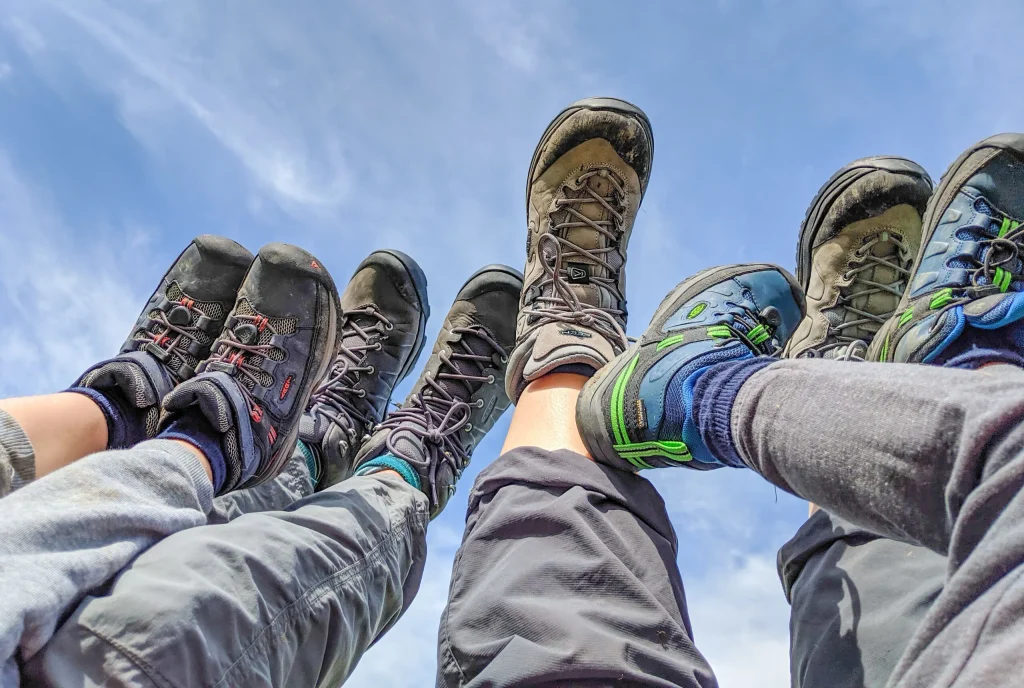
Wellies are fine for puddle jumping and a short stroll. But if you want your little ones to cover any serious distance, their feet need to be comfortable, well supported and dry. Wellies just won’t do. Imagine how uncomfortable you would feel walking up a fell in wellies?
Proper walking boots can make a huge difference, particularly on the rocky, uneven and muddy paths you’ll find around the Lake District.
And make sure they’re actually comfortable. There’s no point having the fanciest little walking boots in the world if your child starts complaining about them 400 metres into the walk.
5. Wear the right gear
Lake District weather can be… unpredictable. You can set off in glorious sunshine and be standing in cloud and rain half an hour later. Layers are therefore your best friend.
Children also have a slightly annoying habit of getting incredibly hot while running uphill, stripping off half their clothes, then becoming freezing the second you stop for lunch.
Unless it’s a hot summers day, when shorts, t-shirt, sun hat and hiking boots will do, our standard attire for hiking with kids is:
- tracksuit bottoms
- waterproof trousers (these ones from Mountain warehouse are fab)
- t-shirt
- hoodie / jumper
- waterproof padded jacket (we love these ones as they fold up small)
- a snood
- waterproof mittens (these ones are great as they actually stay on!)
- warm hat
6. Hike regularly
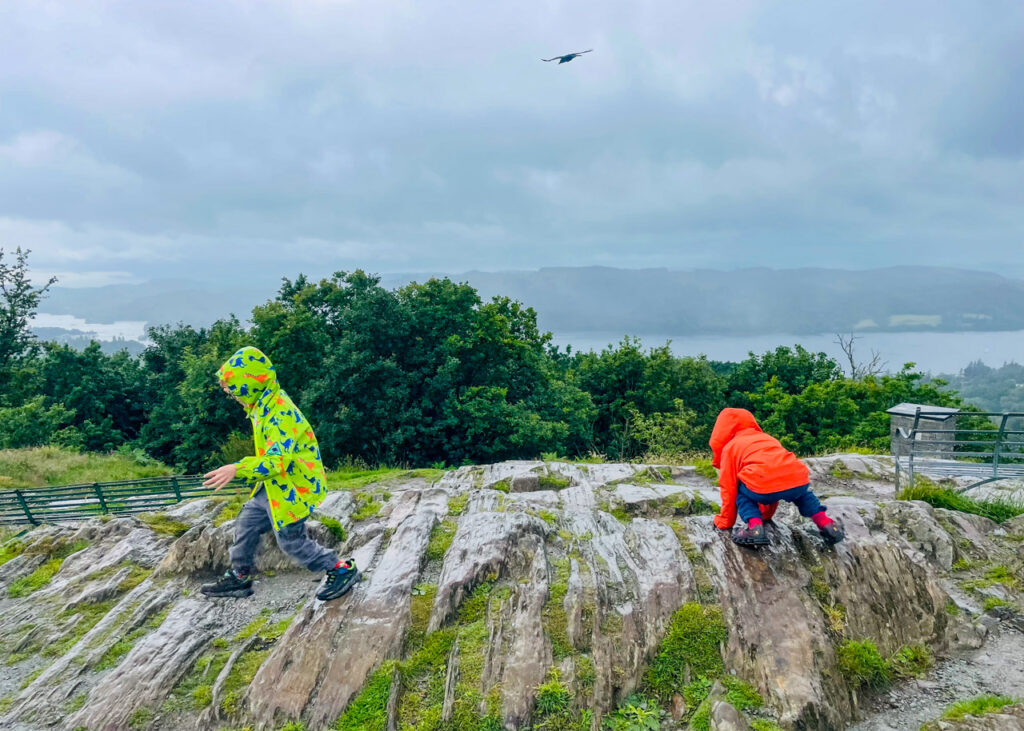
The more your little ones walk, the more they’ll get used to it. And this doesn’t mean you have to drag a three-year-old up a mountain every weekend. A short woodland walk, a stroll around a lake, a beach walk or even a wander around your local area all count.
The aim is simply to make walking a normal part of life rather than something that happens once every few months when you’ve decided you’re all going to conquer a fell. Regular walks also mean you gradually learn what your child can manage.
7. Choose an interesting walk
A flat, straight path might sound like the easiest option, but for a toddler it can be spectacularly boring. Young children don’t particularly care that you’ve picked a lovely scenic route. They want stuff to do.
Look for walks with rocks to climb, trees to explore, streams to splash through, bridges, puddles, animals and interesting paths. The Lake District is brilliant for this. There are endless opportunities for little adventures along the way.
Some of the best walks for toddlers in the Lake District are:
- Aira Force walk (circular, 2.2km)
- Fell Foot walk (circular, 2.7km)
- High Dam Tarn walk (circular, 2.8km)
- Tarn Hows walk (circular, 3km)
And allow time for them. At this age, 1km could quite easily take an hour. That isn’t necessarily a bad thing. If they’re happily exploring rather than whining, you’re winning.
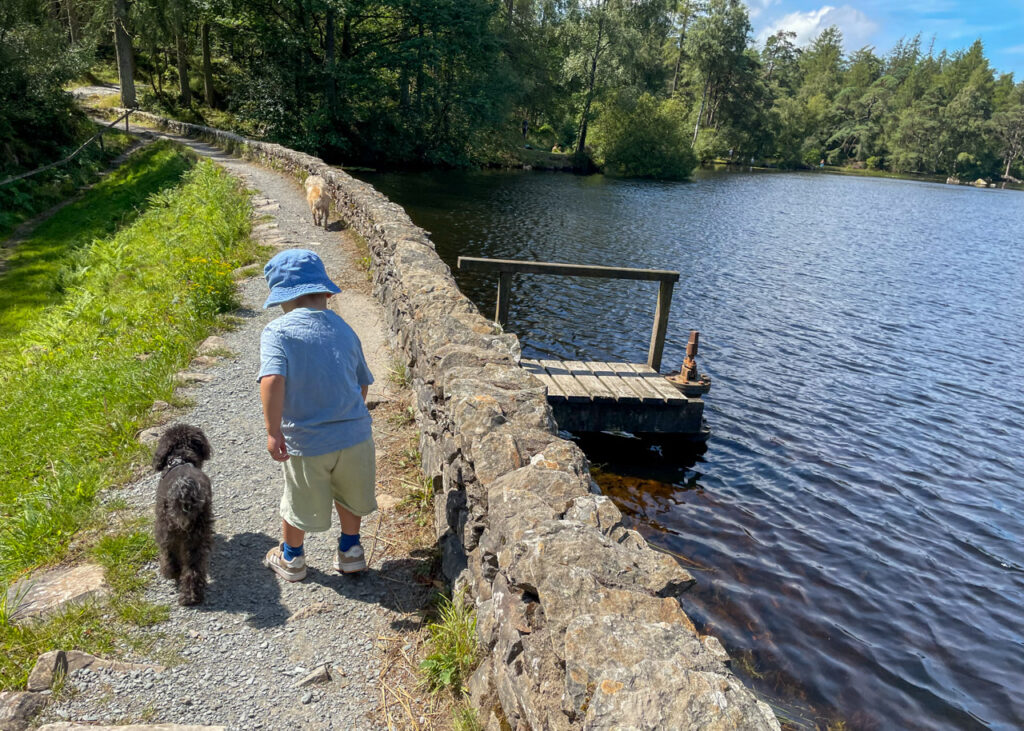
Lake District toddler & pre-schooler walks
Selected walks that are short, relatively flat and full of variety to keep little legs moving. Most importantly, every walk has been tested by a toddler or pre-schooler.
8. Play games, sing songs, and engage with them
‘Going on a bear hunt’ (from the book by Michael Rosen) was always a popular song on our hikes when the boys were little. This can then be adapted for anything along the way. We recommend doing a verse about ‘poo’. That always lifts spirits!
We’re going on a bear hunt (We’re going on a bear hunt)
We’re going to catch a big one (We’re going to catch a big one)
We’re not scared (We’re not scared)
What a beautiful day! (What a beautiful day)
Uh-oh Grass! Long wavy grass.
We can’t go over it, we can’t do under it,
Oh no! We’ve got to go through it!
Swishy swashy! Swishy swashy! Swishy swashy!
A popular game is the ‘nature shopping list’. The kids are given a list of items that they need to find. This may be a feather, stone, stick, leaf, for example. With older kids, the list may be something like – something spikey, something yellow, something smooth. This is a great game to get them exploring their surroundings on a family hike, and these items can be collected for a craft project back at home.
Or perhaps get them to to take photos on a kids camera, to print out and make into a collage once home.
We also like to get them involved with the navigation. Show them on the map the objects you’re looking for on your hike and talk them through the instructions on the walk guides. I often pretend that I can’t find the style or gate we need to find, and the boys run off giggling to where it is, wondering how blind their Mum is!
Another idea is geocaching. This is an outdoor treasure-hunting game where participants (Geocachers) use a GPS receiver or other navigational techniques to hide and seek containers (called “geocaches” or “caches”). This is a good idea for kids ages 4+ and more information can be found on the geocaching.com website.
9. Incorporate crafts into your walk
Check out these outdoor craft activities for kids. Some of these ideas, such as a nature mobile, nature weaving, or nature crowns, can be made whilst on your walk using the items that your find along the way. Just make sure you take some card, scissors, string and double-sided sticky tape along with you; they shouldn’t take up too much space in your day sack.
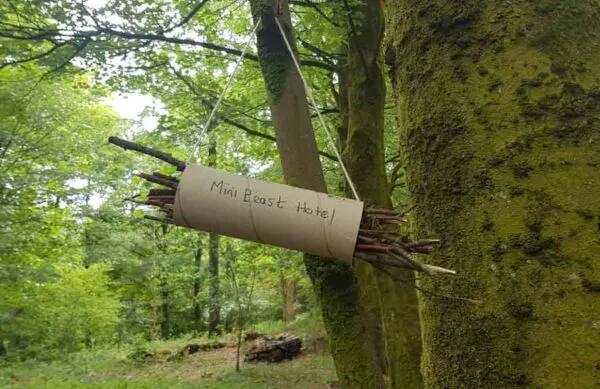

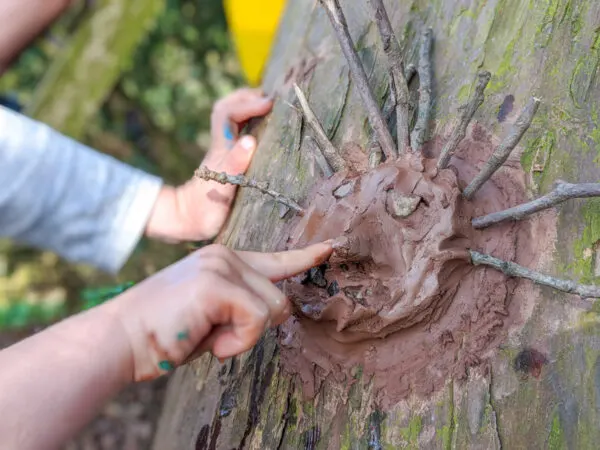
You may want to do some of the other crafts when you get home, but it will be fun looking for the nature items you need whilst on your walk. Please only pick up twigs and leaves that have fallen to you ground. Don’t pick anything living (unless it’s in your garden).
10. Let the kids lead the way
From the start of your walk, allow the kids to decide which direction you walk in (although please stick to marked footpaths). If you have two or more kids, and to avoid arguments, it may be a good idea for them to take it in turns.
So each junction you arrive at, the kids decide which way to go! They will love being in charge of the walk and it promotes independence.
You may end up walking in never-ending circles, but go with the flow. Similarly, you don’t want to get lost! So make sure you have your OS Map to hand, and keep track of where you are.
11. Hike with friends
With extra kids along for the hike, there are more pals to play with. This can be tricky when kids are at different stages with their physical ability. Try to meet up with families with kids of similar ages, otherwise parents with younger kids may be too tempted to shoulder carry their little one to keep up with everyone.
12. Accept that there will be major strops
With all good intentions on your part, kids are going to have their off days and they just refuse to walk. Try playing a game with them, or bring out the snacks. But if all this fails, abort the hike and try another day.
But don’t give up! I firmly believe that making hiking fun for kids and hiking regularly as a family are the key to long family hikes in the future.
Lake District Kids is a free online resource. If you have found this website useful for planning your family adventures, you can show your support by buying us a coffee. Thanks so much!

Also, feel free to share your walk photos in our Lake District Kids Facebook Group or on Instagram using by tagging @lakedistrictkidsuk in your caption so we can share with our wider community.
Want more ideas for family walks? Use the search walks page to find the perfect family walk.
And if you’re hiking with little ones, check out our tips for hiking with kids under 5 to help you get a extra mile or two out of those little legs.